Swearing-In Ceremony for Newly Elected Arkansas Supreme Court Justices to be Streamed Live Today at 3:00 p.m.

The Honorable Karen Baker and the Honorable Courtney Hudson Henry will be sworn in as Associate Justices of the Arkansas Supreme Court today at 3:00 p.m. in the Arkansas Supreme Court courtroom in Little Rock.  The ceremony will be streamed live online. 

Judge Karen Baker formerly served as the Court of Appeals Judge for District 2, Position 2.  She was elected to the Arkansas Supreme Court in a runoff election on November 2, 2010, where she received 60% of the votes to overtake her opponent, Pulaski County Circuit Court Judge Tim Fox. See Arkansas Supreme Court Election Results: Judge Karen Baker Wins Election for Position 6.

Judge Courtney Henry, also a former Arkansas Court of Appeals Judge (for District 3), was elected to the Arkansas Supreme Court on May 18, 2010.  She received 58% of the vote to defeat Circuit Court Judge John Fogleman. See May 18, 2010 Judicial Election Results.

Former Arkansas Supreme Court Justice Annabelle Imber Tuck was the first female Justice to be elected to the Arkansas Supreme Court in 1997.  Justice Imber Tuck now serves as Commissioner of Arkansas Access to Justice.  The elections of the Honorable Courtney Henry and the Honorable Karen Baker mark only the second and third times in Arkansas history that females have been elected to serve as Associate Justices to the Arkansas Supreme Court.  Other women who have served on the Court by way of appointments include: Elsijane Trimble Roy, Betty Dickey, Andree Layton Roaf, and Elana Cunningham Wills.

Click here to watch the video from the January 10, 2011 Arkansas Supreme Court Swearing-In Ceremony.

Governor Beebe Makes Two Judicial Appointments to Arkansas Court of Appeals

Governor Mike Beebe announced yesterday two judicial appointments to the Arkansas Court of Appeals.  The two vacancies on the Court of Appeals were created by the 2010 elections of Court of Appeals Judges Karen Baker and Courtney Henry to the Arkansas Supreme Court. See Arkansas Supreme Court Election Results: Judge Karen Baker Wins Election for Position 6; Arkansas Democrat Gazette: Two Appellate Court Races Settled, One Headed to November Runoff.

The Governor appointed Cliff Hoofman, of Enola, to replace Karen Baker as Associate Judge for District 2.  His appointment expires on December 31, 2012.  Hoofman had been appointed by Governor Beebe to the Arkansas Highway Commission in 2007.  Hoofman has resigned from that position and his replacement will soon be announced by the Governor’s office.

Doug Martin, of Fayetteville, was appointed by the Governor as Associate Judge for District 3 on the Arkansas Court of Appeals to replace Courtney Henry.  His appointment expires on December 31, 2012.

Circuit Court Judge David Laser Appointed in West Memphis 3 Case

Circuit Court Judge David Laser to preside over WM3 case in Arkansas.
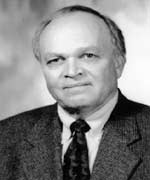
Judge David Laser

The Associated Press reports that Circuit Court Judge David Laser will preside over the hearings for Damien Echols, Jason Baldwin and Jessie Misskelley (the West Memphis 3). 

Last month, the Arkansas Supreme Court ordered that there be a new evidentiary hearings in light of the proper interpretation of the relevant statutes. See UPDATED: Arkansas Supreme Court: West Memphis 3 Cases Reversed and Remanded.  The Arkansas Supreme Court ordered the circuit court to consider new DNA evidence and other evidence to determine whether Echols, Baldwin, and Miskelley are entitled to a new trial. 

The circuit court judge who had previously resided over these cases, David Burnett, was recently elected to the state Senate.

UPDATED: Arkansas Supreme Court: West Memphis 3 Cases Reversed and Remanded

West Memphis 3 Cases Reversed and Remanded

“Therefore, we reverse and remand for an evidentiary hearing and reconsideration of the motion in light of the proper interpretation of the statutes.”

Echols v. State, 2010 Ark. 417, at 16.

The Arkansas Supreme Court handed down opinions this morning in the West Memphis 3 cases.  The Court reversed all three cases and remanded for evidentiary hearings to be held in accordance with the proper interpretation of the relevant statutes. 

Here are links to the opinions:

The Echols case was argued to the Arkansas Supreme Court on September 30, 2010.  Click here to view the video of the oral argument.

News Coverage of Today’s Opinions:

UPDATED News Stories:

Video Links:

UPDATE: Arkansas Supreme Court Election Results: Judge Karen Baker Wins Election for Position 6

With 78% of the precincts reporting, the Arkansas Democrat Gazette has called the election for Position 6 on the Arkansas Supreme Court for Judge Karen Baker.  Judge Baker led by a slim margin early in the night, but took a bigger lead as the night continued.  The race in Pulaski County (Judge Fox’s home county) was close, with Judge Baker edging out Judge Fox 51% to 49%.  In Judge Baker’s home county (Van Buren County), Judge Baker defeated Judge Fox by 73% to 27%.  As of the time this post was published, Judge Fox had won or was leading in the following counties: Ashley, Perry, Polk, Prairie. and Sevier.  Several other counties had not yet reported results.

Judge Karen Baker currently serves as the Court of Appeals Judge for District 2, Position 2.  She was elected to that position in 2000 and re-elected in 2004 (Act 1812 of 2003 reapportioned the Court of Appeals districts and required a new election for this position in 2004).  Judge Baker’s eight-year term on the Court of Appeals will end in 2012.  It is expected that Governor Mike Beebe will appoint a replacement for the vacancy that will be created when Judge Baker takes office as an Associate Justice on the Arkansas Supreme Court in January, 2011.

Judge Tim Fox was elected to serve as a Pulaski County Circuit Court judge in 2002 and then re-elected to another six-year term in 2008.

UPDATE: As of 6:00 p.m. on November 3, 2010, 98% of precincts are reporting the following results in the Supreme Court Election:  Baker 388,530 (61%), Fox 252,639 (39%).

Fite Petition for Writ of Prohibition Denied Without Prejudice

The Arkansas Supreme Court handed down a Formal Order today denying Tommy L. Fite’s Petition and amended petition for writ of prohibition without prejudice.

Fite is a Republican candidate for the Arkansas House of Representatives in District 83.  Last week, Pulaski County Circuit Judge Collins Kilgore ruled that Fite was ineligible for the ballot because he plead guilty to a misdemeanor bribery charge in 1984.  Judge Kilgore ordered election officials not to count votes for Fite.  Fite filed a Petition for Writ of Prohibition and an Amended Petition for Writ of Prohibition with the Arkansas Supreme Court.  In response, Michael Grulkey filed a Response to Fite’s Petition for a Writ of Prohibition and Motion for Rule 11 Sanctions Against Fite.  Both the Petition and Motion for Rule 11 Sanctions were denied by today’s order.

The pleadings filed in the Arkansas Supreme Court can be viewed here:

The seat for which Fite is running represents Crawford and Franklin counties and is currently held by Republican Beverly Pyle.  Democrat Leslee Milam Post is also a candidate for that position.

Elections will be held tomorrow, November 2, 2010.

Arkansas Business Analyzes Supreme Court Election Spending

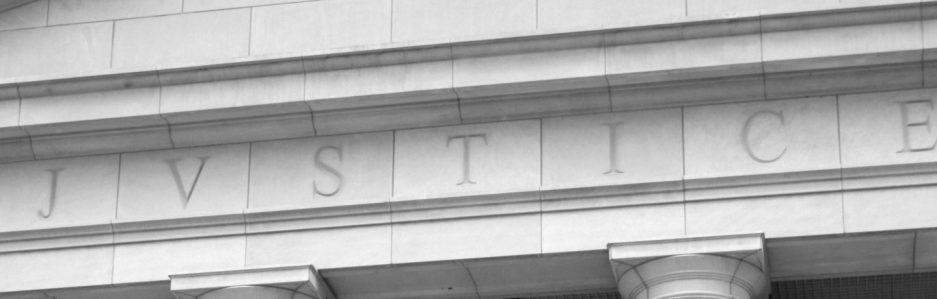
Arkansas Justice Building--Home of the Arkansas Supreme Court and Arkansas Court of Appeals

In its October 25 issue, Arkansas Business published an article detailing the amount of money spent on Supreme Court races in Arkansas.  The articles provides a thorough analysis on the issue of money and judicial elections, both on the state level and from a national perspectives.  Some statistics of note:

Click here for a link to the article.

UPDATE: Arkansas Supreme Court Clarifies Original and Appellate Jurisdiction for Constitutional Amendments: Forrester v. Daniels.

UPDATE Below the Jump:

The Arkansas Supreme Court handed down its decision today in Forrester v. Daniels, clarifying that it has original jurisdiction over challenges to constitutional amendments that are initiated by the citizens, but appellate jurisdiction over challenges to constitutional amendments referred by the legislature. Forrester v. Daniels, 2010 Ark. 397.  This has been the rule for many years, but had been called into question after amendment 80 to the Arkansas Constitution became effective on July 1, 2001. See Becker v. McCuen, 303 Ark. 482, 708 S.W.2d 71 (1990).

Because the Court did not reach the merits of the Petitioner’s case, this blog post will not discuss the merits in detail, but will only address them briefly.  The proposed amendment at issue here deals with the maximum interest rate that can be charged by various entities, and also deals with the power of governmental units to issue bonds. Forrester, 2010 Ark. 397, at 2-4.  The gist of the challenge is that the legislature attempted to cover too many issues in a single proposed amendment.  Id. at 3-4.

The importance of this case, however, is more procedural in nature.  Because, as discussed above, the status of the Supreme Court’s jurisdiction (original or appellate) was in doubt after the enactment of Amendment 80, the Petitioner filed nearly identical actions in the Pulaski County Circuit Court and the Arkansas Supreme Court, both on the same day.

A proposed constitutional amendment may appear on the ballot by one of two methods.  The first is by referral from the legislature, the requirements of which are provided in at Arkansas Constitution Article 19, § 22.  The second method is through the initiative and referendum power reserved to the people.  This procedure is outlined at Arkansas Constitution Amendment 7.

Amendment 7, dealing with amendments resulting from initiatives of the people, provides that “[t]he sufficiency of all state-wide petitions shall be decided in the first instance by the Secretary of State, subject to review by the Supreme Court of the State, which shall have original and exclusive jurisdiction over all such causes.” Ark. Const. Amend. 7.  Article Nineteen, Section 22 of the Arkansas Constitution has no such provision, so the Arkansas Supreme Court in Becker held that it did not have original jurisdiction, but had only appellate jurisdiction pursuant to Article 7, § 4 of the Arkansas Constitution. See Becker, 303 Ark at 482, 708 S.w. 2d at 71.

The reason this is an issue in Forrester is that Article 7 was repealed by Amendment 80 of the Constitution.  Amendment 80 provides, in part, that “[t]he Supreme Court shall have . . . [o]riginal jurisdiction to determine sufficiency of state initiative and referendum petitions and proposed constitutional amendments.” Ark. Const. Amend. 80, § 2(D)(4).  Because the provision conferring original jurisdiction on the Arkansas Supreme Court includes the phrase “and proposed constitutional amendments,” the Petitioner argued that the Arkansas Supreme Court now has original jurisdiction over all proposed constitutional amendments, and not just those resulting from initiatives. See Forrester, supra.

In a unanimous opinion, the Arkansas Supreme Court disagreed.  The Court held in Forrester that the phrase “and proposed constitutional amendments” must be read in the context of the phrase “to determine sufficiency of.” Forrester, 2010 Ark. 397, at 8-9.  According to the Court, that phrase only makes sense if “proposed constitutional amendments” refers only to amendments that result from initiatives from the people, as those are the only types of amendments subject to a sufficiency challenge. Id.  For proposed amendments referred from the legislature, the only question is “whether the procedures governing the method for the legislature to propose an amendment have been followed.” Id.

In an interesting paragraph at the end of the opinion, the Court then seemed to look at its own rules to help it interpret the constitutional issue.  The Court noted that it had amended its rules to conform to the changes resulting from Amendment 80.  After the changes, Rule 6-5 read as follows:

(a) Original Jurisdiction. The Supreme Court shall have original jurisdiction in extraordinary actions as required by law, such as suits attacking the validity of statewide petitions filed under Amendment 7 of the Arkansas Constitution or, where the Supreme Court’s contempt powers are at issue.

Ark. Sup. Ct. R. 6-5(a) (2010).

In Forrester, the Court held its conclusion was “further bolstered” by the fact that it had amended the rules in response to Amendment 80, but had done so “in a way to indicate that our jurisdiction of the instant challenge is now original.” Id. at 9-10.  Arkansas appellate lawyers should bear this in mind when dealing with procedural issues before the Arkansas Supreme Court, as the Court seems willing to look to its own rules to help it interpret constitutional provisions.

Continue reading “UPDATE: Arkansas Supreme Court Clarifies Original and Appellate Jurisdiction for Constitutional Amendments: Forrester v. Daniels.”

UPDATE: Arkansas Supreme Court November 2010 Runoff Election Update: Judge Karen Baker v. Judge Tim Fox

The election to fill the vacancy left by Arkansas Supreme Court Justice Imber’s retirement from the court late last year is less than three weeks away. The election, a runoff election between Arkansas Court of Appeals Judge Karen Baker and Pulaski County Circuit Court Judge Tim Fox, is being held because neither of the three candidates in the May 18 election received a majority of the votes. In the May election, Judge Karen Baker received 48% of the vote, Judge Tim Fox received 37% of the vote, and Evenlyn Moorehead received the remaining 15% of the vote.

This race is the only Appellate Court race that will be on the ballot in the general election on November 2, 2010.  Because of this, the race has garnered quite a bit of attention from the media in the last few weeks.  Below are links to stories that have been published about the race recently.

ArkansasAppeals.com will continue to post articles about the judicial race as they become available.  Also, you can keep an eye on our blog and on our Twitter feed on election night for continuing updates on the election.