➡️ Arkansas Supreme Court Rule 4-1(e) requires that parties filing briefs provide a bookmark to each section of the brief required by Rule 4-2. Those sections are the cover, table of contents, points on appeal, table of authorities, jurisdictional statement, statement of the case and facts, argument, request for relief, certificate of service, and certificates of compliance.
📌 Here are the instructions for creating bookmarks in Adobe. There’s a step-by-step interactive walkthrough, but you can also scroll down to see the instructions in a more traditional format.
Interactive Walkthrough
Traditional Format
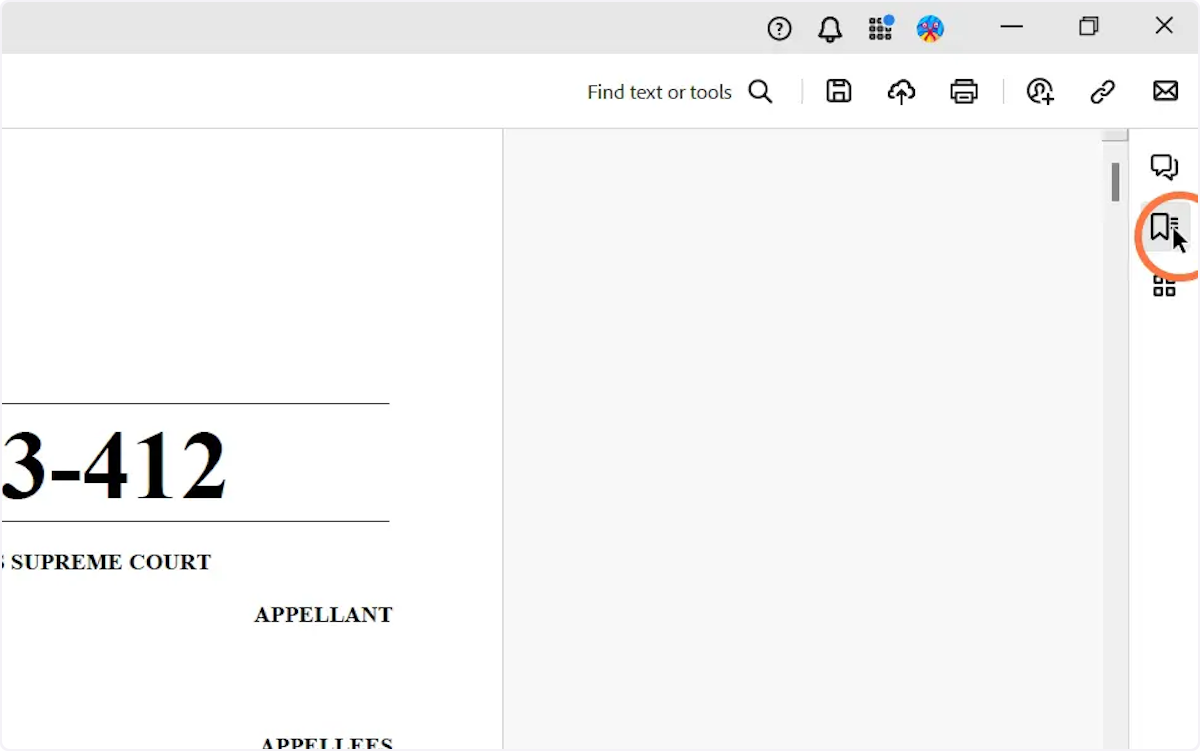
1. Click the bookmarks icon.
In the new version of Adobe, this is on the right-hand side of the page.
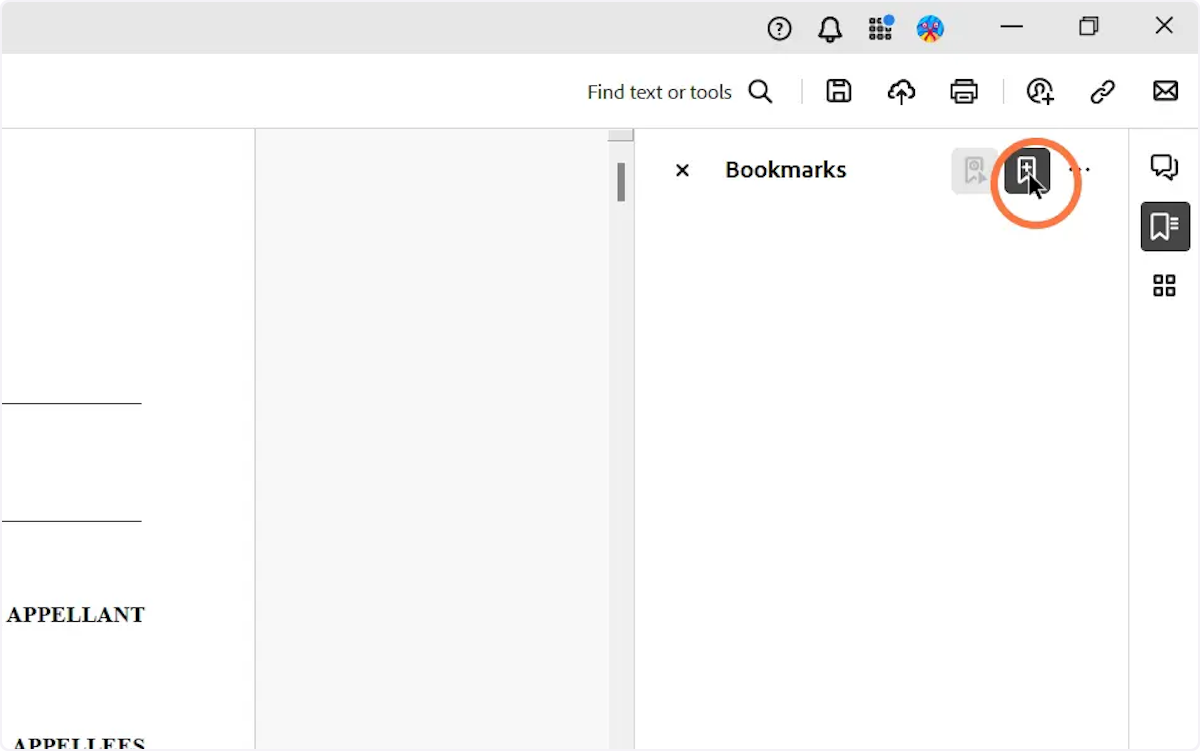
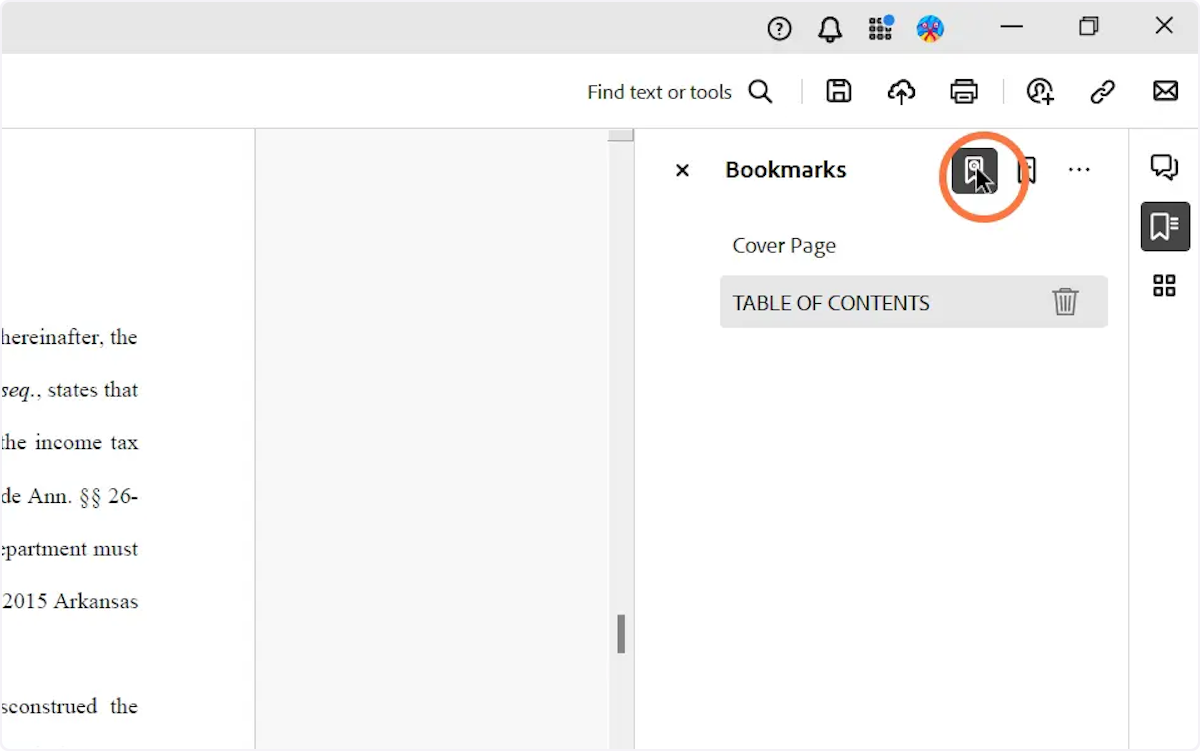
2. Click the add bookmark icon (a bookmark with a plus sign inside of it).
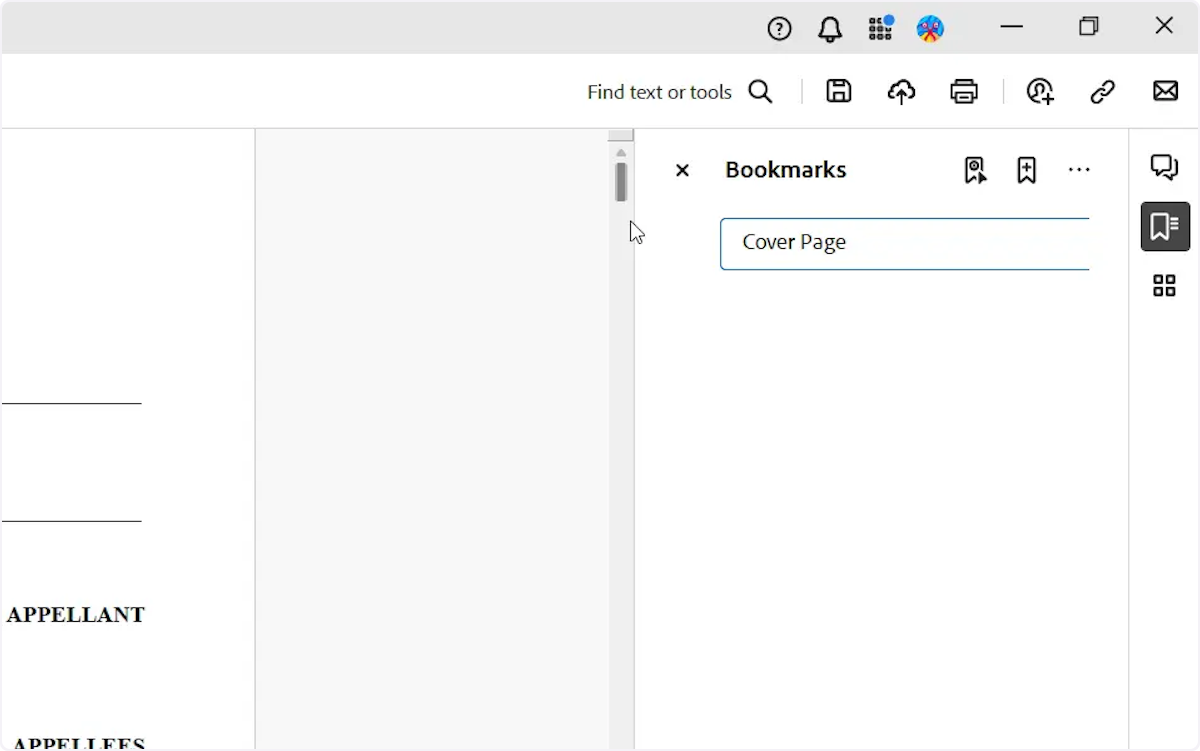
3. Type the name of your new bookmark and press “Enter.”
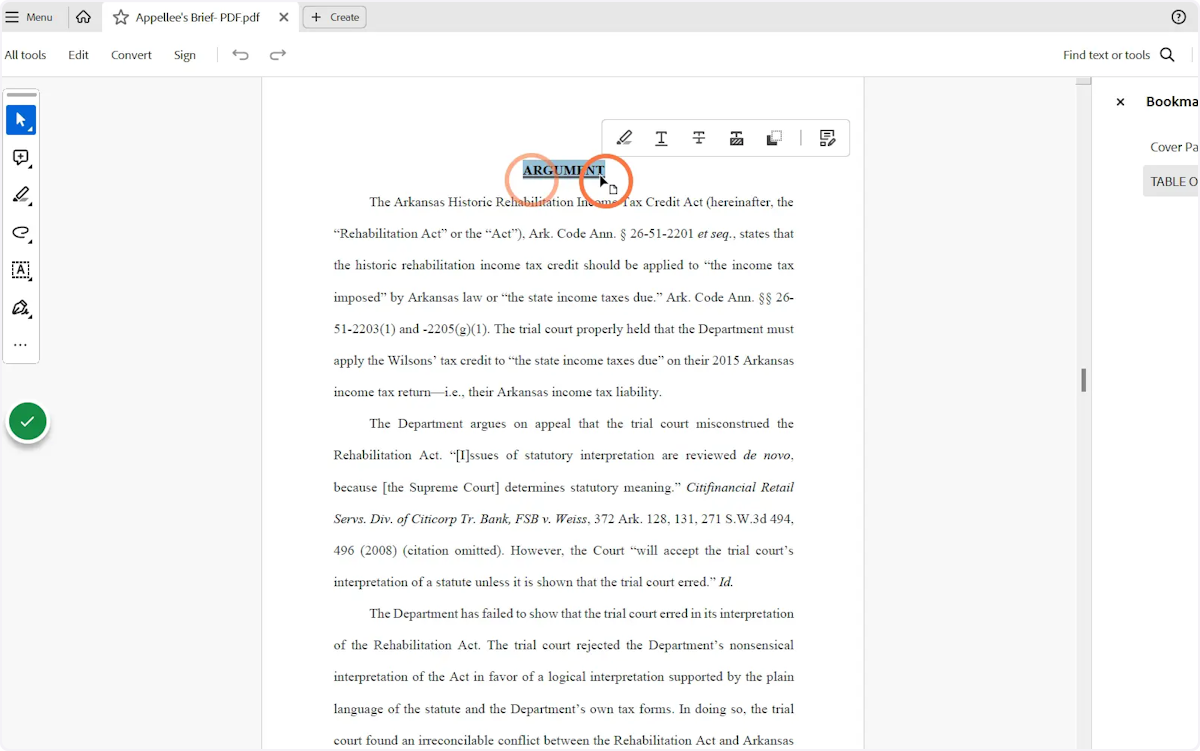
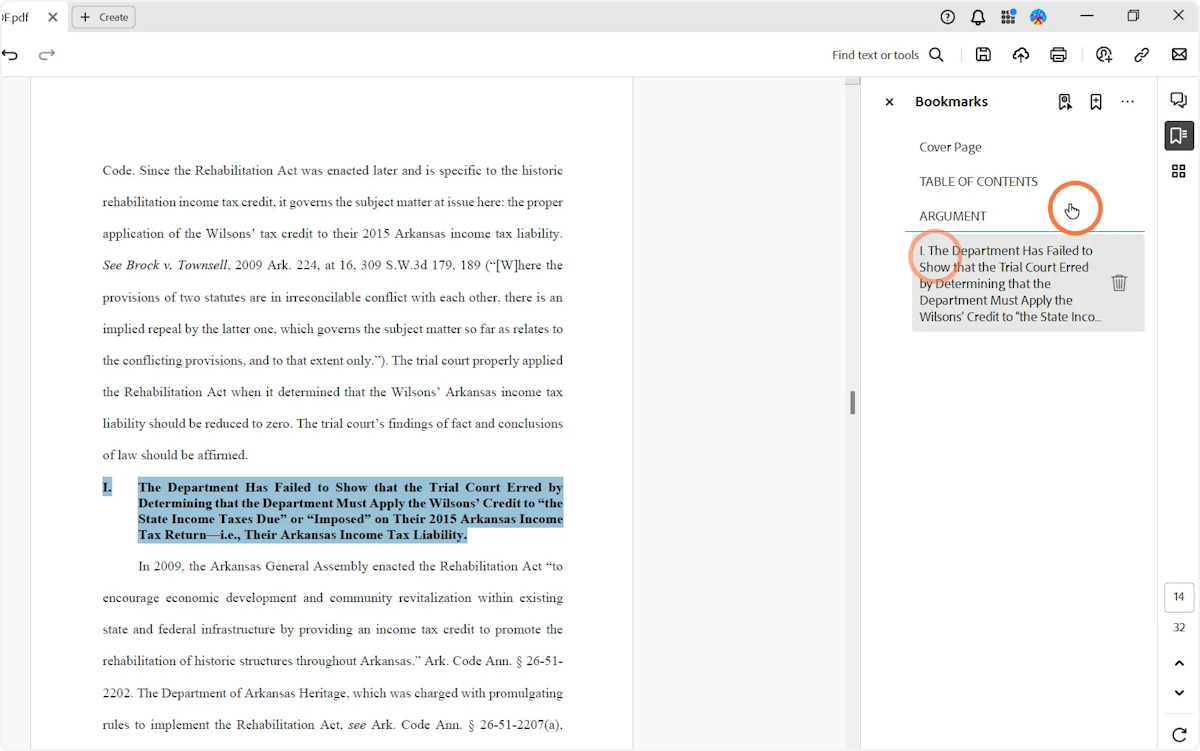
4. You can also highlight the text . . .
5. . . . and then click the add bookmark icon, and the highlighted text will be the name of your bookmark.
6. To “nest” a bookmark, simply drag the bookmark into the heading you are trying to nest the bookmark under.
🔑 Key Takeaway: The denial of a defendant’s motion for summary judgment on an affirmative defense will only be immediately appealed in very limited circumstances.
📝 Background: The plaintiff brought this case under Ark. Code Ann. § 4-7-301 et seq., which (generally speaking) governs the payment of sales commissions by out-of-state principals to in-state sales representatives. In addition to setting the parameters of the payment of commissions (such as requiring a written agreement and setting the timeline for paying the commissions), the statutes also permit a sales representative to obtain treble damages, plus attorney’s fees and costs. In its answer to the complaint, the defendant in Kenmark Optical raised as an affirmative defense that the statutes violate the Commerce Clause and the Equal Protection Clause of the U.S. Constitution. The defendant then filed a motion for partial summary judgment on the same issue. The trial court granted summary judgment to the defendant as to the treble damages portion of the statutes, but denied summary judgment as to the remaining portions of the statutes.
❓ Main Question: Was the denial of the motion for summary judgment appealable? Generally, the denial of a motion for summary judgment is considered interlocutory (and thus not appealable), but there was one case that the defendant relied on for its argument to the contrary.
➡️ That One Case: In BPS, Inc. v. Parker, 345 Ark. 381, 47 S.W.3d 858 (2001), the Arkansas Supreme Court held that the trial court’s denial of a motion for summary judgment on that particular defendant’s affirmative defense (the Fireman’s Rule) was appealable. In that case, the trial court did not merely deny the motion for summary judgment. Instead, in its 18-page “Joint Findings of Fact and Conclusions of Law,” the trial court in BPS did not simply examine whether there was a genuine issue of material fact. Rather, the trial court went further and held that the Fireman’s Rule did not apply, essentially granting affirmative relief to the plaintiffs on the defendant’s motion for summary judgment. The Arkansas Supreme Court held that this “foreclosed [the defendant] from further asserting a defense under the Fireman’s Rule and from offering evidence at trial on that issue.” Therefore, the Arkansas Supreme Court held that the this portion of the circuit court’s order was “a final disposition and appealable.”
🪶 Opinion: Looking back now at Kenmark Optical, the Arkansas Court of Appeals considered whether the denial of the motion for summary judgment in this case was appealable, and distinguished Parker. The court first held that, unlike in Parker, in this case, there was “nothing in the circuit court’s order that serves as a final disposition regarding the constitutionality of” the relevant statutes. Thus, unlike in Parker, this was not a situation where the denial of the motion for partial summary judgment essentially served as the granting of summary judgment in favor of the plaintiff. The Court of Appeals then held that “the circuit court’s order does not prevent [the defendant’s] presentation of any defense at trial.” Thus, this was not a situation where the denial of the motion for partial summary judgment essentially served as an order striking the affirmative defense (which would make the order appealable under Ark. R. App. P.–Civ. 2(a)(4)). Therefore, the order was not an appealable order, and the Court of Appeals dismissed the appeal without prejudice.
🔎 Further Reading: Although denials of motions for summary judgment are rarely appealable, the Arkansas Supreme Court in Parker relied on two other cases in an order denying a motion for summary judgment was held to be appealable:
It might look strange, but this is how Court of Appeals cases were cited for a few years after the Court of Appeals was established. Rest assured, this is a Court of Appeals case, and this is the correct citation. ↩︎
🔑 Key Quote: “[The Appellant’s] perception of failings in the [administrative] process cannot be addressed by avoiding the administrative procedure altogether.”
📝 Factual Background: This case started as a zoning dispute, but the relevant issue for this post relates to administrative procedure. Frankhouse had operated an apartment building on a piece of property for 20 years, but as it turns out, that property was zoned commercial. In 2020, he was told he’d have to ask the City Council to rezone the property as medium/high density residential, but when he did, the City Council denied the request. About a month later, the City served all of Frankhouse’s tenants with notices to vacate.
📜 Procedural Background: Rather than appeal to the board of zoning adjustment (BOA), Frankhouse went straight to circuit court. He sued for declaratory relief (seeking a declaration that because he had used the property as an apartment for so long that the City did not have the authority to require his tenants to vacate) and for injunctive relief (to prevent the city from trying to evict his tenants and to require the City to issue him the “necessary permits”). The City filed a motion to dismiss, arguing that the declaratory and injunctive relief claims were inextricably tied to Frankhouse’s appeal from the denial of his rezoning request. In response, Frankhouse stated that he was dismissing that appeal (leaving only the declaratory judgment and injunctive relief claims). The circuit court dismissed the lawsuit without prejudice, holding that Frankhouse’s failure to appeal to the BOA deprived the circuit court of subject matter jurisdiction.
🪶 Opinion: In response to the City’s argument that he had not exhausted his administrative remedies, Frankhouse argued on appeal that there are exceptions to the exhaustion-of-remedies doctrine that applied to his case. The Court of Appeals acknowledged that there are exceptions to that doctrine (no genuine opportunity for adequate relief, irreparable injury if required to pursue administrative remedies, futility of pursing administrative remedies, etc.), but held that Frankhouse had not adequately made or developed those arguments to the circuit court. In fact, Frankhouse had stated that he went directly to circuit court not for those reasons, but because of “the gravity of the action that the City was proposing to take” and “the uncertainty about what they could do.” With the appeal being rejected by the Court of Appeals because of the failure to exhaust administrative remedies, that left the requests for declaratory and injunctive relief. But the circuit court had not made specific rulings on either of those requests for relief, so neither issue was preserved for appeal.
❌ Outcome: Because Frankhouse did not exhaust his administrative remedies, the circuit court did not have subject matter jurisdiction. And because the circuit court did not have subject matter jurisdiction, the Court of Appeals did not have subject matter jurisdiction. Therefore, the Court of Appeals dismissed the appeal.
🔑 Key Takeaway: If the circuit court has more than one independent ground or basis for its ruling, make sure to address all of the grounds for the ruling in your appellate brief.
📝 Background: This was a legal malpractice case. The plaintiff sued two law firms, and the circuit court granted summary judgment in favor of both law firms on the issue of the statute of limitations. But for one of the law firms, the circuit court also based its summary judgment ruling on the issue of a lack of proximate causation (because some of the issues the plaintiff complained about occurred while she was acting pro se). The plaintiff appealed, but in her argument that the circuit court erred in granting summary judgment, she only briefed the issue of statute of limitations. She did not brief the issue of proximate causation.
🪶 Opinion: Quoting United Food & Com. Workers Int’l Union v. Wal-Mart Stores, Inc., 2014 Ark. 517, at 6, 451 S.W.3d 584, 587, the Arkansas Court of Appeals held that if a circuit court has more than one independent ground for its decision, and the appellant does not address all of the grounds, then the Court of Appeals will “affirm without addressing any of the grounds.” When this happens, the Court of Appeals will not develop an argument for the appellant, but instead will summarily affirm.
💭 Our Thought: Whether the circuit court has relied on an independent ground for its decision, and whether the appellant has adequately addressed the independent ground, is not always a clear-cut analysis. In fact, in Corbitt v. Arkansas Game & Fish Comm’n, 2023 Ark. 61, the issue of whether the appellant had adequately addressed one of the independent bases for the circuit court’s decision was the subject of some debate during oral argument and ultimately resulted in a dissent on that issue. Therefore, it is important to thoroughly review the record for all of the grounds for the circuit court’s decision, and then the make abundantly clear in the brief that you are addressing all of those grounds.
🔎 A Closer Look: There’s actually one more procedural issue in this case. A plaintiff can overcome a statute of limitations defense if there is fraudulent concealment. In her brief, the plaintiff argued that one of the firms had engaged in fraudulent concealment. But at the trial court, the plaintiff had only mentioned concealment “in passing” at the hearing, but had not otherwise developed the argument. Therefore, the Court of Appeals held that the fraudulent concealment argument was not preserved for appeal.
In McKelvey v. McKelvey, 2020 Ark. App. 536, the wife filed a complaint for divorce, and the husband filed a counterclaim. They both sought custody of the minor child, and in addition, they both made various claims regarding marital property, child support, and disability payments paid to the child.
At the beginning of the divorce hearing, the parties announced that they had agreed to share joint legal and physical custody of the minor child. The circuit court subsequently entered a divorce decree that awarded the husband a divorce from the wife. The divorce decree also approved a separate property settlement agreement and stated that the property settlement agreement would be incorporated into a future order:
A little over a month later, the circuit court entered an amendment to the divorce decree that resolved the property issues and other contested issues. That amended order, however, did not incorporate the property settlement agreement. Further, although the parties had stated on the record that they had reached an agreement as to custody, neither the divorce decree nor the amended order addressed custody.
The husband appealed from some of the circuit courts financial rulings. Based on this record, however, the Court of Appeals held that “custody of [the minor child] is an issue the circuit court has not yet resolved.” Therefore, the Court of Appeals dismissed the appeal for lack of jurisdiction (because there was no final order).
Interestingly, the Court of Appeals noted that “the PSA is not included in the record, making it impossible for this court to ascertain its contents.” It is not entirely clear whether the property settlement agreement addressed custody. This language from the Court of Appeals seems, however, to leave open the possibility that had the property settlement agreement been included in the record, and had the property settlement agreement addressed custody, that perhaps the Court of Appeals would have addressed the merits. Nevertheless, the safest bet would be to make sure that property settlement agreement is not only included in the record, but also incorporated into a formal order.
In Lancaster v. Rogers Construction, Inc. (Lancaster I), 2019 Ark. App. 582, the Arkansas Court of Appeals dismissed an appeal without prejudice for lack of a final order. In that case, the Plaintiffs (Mr. Lancaster and, later, Ms. Lancaster) filed suit against Rogers Construction, Inc., Roger E. Rogers, Rustan K. Rogers, and John/Jane Does 1-99 for breach of express contract, breach of implied contract, breach of implied warranty, negligence, strict (product) liability, and fraud. Through a series of motions and orders, the circuit court dismissed the breach of express contract and strict (products) liability claims against the individual defendants, and also dismissed the complaint as to the corporation. The circuit court’s disposition of the remaining claims was, as the Court of Appeals put it, “not clear,” so the Court of Appeals dismissed the plaintiff’s appeal without prejudice.
The Plaintiffs then filed a motion to dismiss their claims against the individuals and the John/Jane Doe defendants with prejudice. That motion was granted, and the following language appeared in the order:
This language might have been sufficient to resolve the finality problem, but, as the Court of Appeals pointed out in Lancaster v. Rogers Construction, Inc. (Lancaster II), 2020 Ark. App. 582, there was still a problem. As it turns out, the Court of Appeals handed down its decision in Lancaster I on December 11, 2019. The plaintiffs’ motion to dismiss was filed on December 18, and the order dismissing the claims (quoted above) was entered on December 19. The problem is that the mandate didn’t issue until January 10, 2020.
Because the order predated the mandate being issued, the Arkansas Court of Appeals held that “the circuit court’s December 19 order was entered without jurisdiction and is considered null and void.” Therefore, the court again dismissed the appeal without prejudice.
We’ll be watching for Lancaster III, and will update this post accordingly.
The Court of Appeals in Jackson, et al v. Iberiabank, 2020 Ark. App. 372, reiterated a prior holding: That the bankruptcy of one defendant does not create a final order as to another defendant. But, as discussed below, that can create a trap for attorneys if the bankrupt defendant gets dismissed later.
In Jackson, a bank sued two defendants (an individual and a corporation) for defaulting on a promissory note. After the complaint was filed, the corporation filed for bankruptcy. This, of course, caused the corporation to receive the protections of the automatic bankruptcy stay, preventing the bank from proceeding against the corporation. The bank then filed–and prevailed on–a motion for summary judgment against the individual defendant, and the individual defendant appealed.
On appeal, the Arkansas Court of Appeals raised sua sponte a jurisdictional issue: Was the summary judgment order against the individual defendant a final order for purposes of appeal? Relying on prior similar cases, the Arkansas Court of Appeals held that one defendant’s bankruptcy “does not affect the lack of finality.” The Arkansas Court of Appeals further held that “while [the bank’s] claims against [the corporation] were stayed by the bankruptcy court when the summary-judgment order on appeal was entered, those claims remained pending and the trial court could reacquire the ability to rule on them at any time.” Therefore, the court dismissed the appeal. The dismissal was without prejudice, so the appellant will have another shot at this once the finality issue can be resolved at the trial court.
For an example of a nightmarish scenario where the Arkansas Court of Appeals dismissed an appeal with prejudice, one need look no further than Ballard v. Allied Financial, Inc., 2016 Ark. App. 539, which was cited in Jackson. In Ballard, a bank sued a couple for replevin to recover a vehicle, and later added the repair facility that had actual possession of the vehicle as a defendant. The couple filed bankruptcy, giving them the protection of the automatic stay. The repair facility did not timely file an answer, and an order of default was entered against the repair facility. The repair facility then filed a notice of appeal. After the repair facility filed its notice of appeal, the court dismissed the couple without prejudice. The repair facility did not file a notice of appeal from that dismissal order.
On appeal, the Arkansas Court of Appeals held that the default judgment against the repair facility was not a final order. However, once the dismissal was entered as against the couple, a final order was created, even though the dismissal as to the couple was without prejudice. Because the repair facility did not file a notice of appeal from the order dismissing the couple, the Court of Appeals held that it did not have jurisdiction to hear the appeal. The court’s reasoning was that the appeal from the first order wasn’t effective because that order was a nonfinal order, and there was no notice of appeal from the second order (and, of course, it was too late to file a notice of appeal by the time the Court of Appeals considered the case). Therefore, the Court of Appeals dismissed the appeal with prejudice.
Probably the cleanest solution to this problem is to try to get the circuit court to attach a Rule 54(b) certificate to the order against the non-bankrupt party. We have previously blogged about Rule 54(b) certificates. And the safest thing to do whenever multiple orders are being entered is to file notices of appeal (and amended notices of appeal) early and often.
We are often asked about creating bookmarks in Adobe, so this post provides a brief explanation of the basics of creating bookmarks. PLEASE NOTE that under the current rules, you must create hyperlinks in your appellate briefs. For instructions on how to do that, visit our previous blog post on the topic.
So, why would anyone need to know about bookmarks? Two reasons come to mind. First, the proposed rules regarding electronic filing require the use of bookmarks. So, if you’re planning to participate in the pilot project, you’ll need to know how to use bookmarks. Second, for ease of navigation, we usually add bookmarks even when we’re proceeding under the current rules (in addition to the required hyperlinks). We do this because we’ve heard anecdotally that some judges prefer bookmarks to hyperlinks, and we think the proposed rule changes (which mandate bookmarks) support that view.
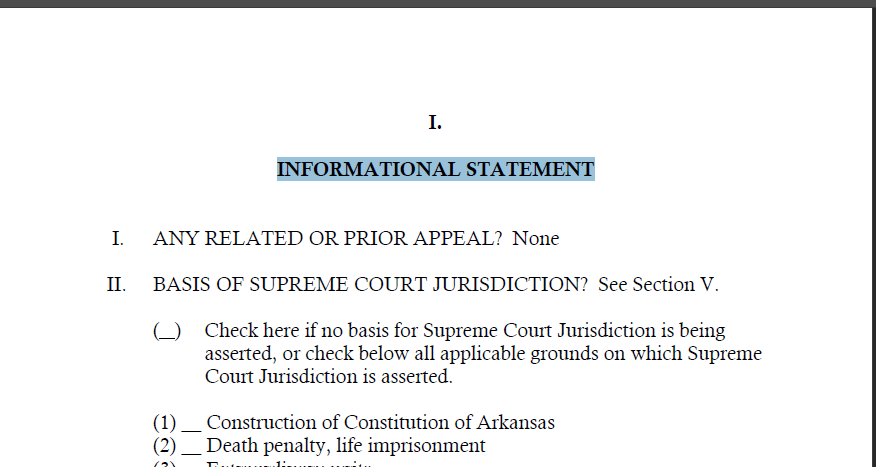
With that background in mind, we move now to the directions. (Note that in the screenshots below, we have simply used the Arkansas Supreme Court’s model appellant’s brief.)
Step 1: Open the bookmarks pane
Click the icon on the left side of the screen that looks like an old-school bookmark. (If you cannot see that icon, there is a very small right-facing arrow that you’ll need to click first.)
Step 2: Browse to the portion of the brief that you are bookmarking
At this point, you’ll simply browse to the part of the brief you want to bookmark. If you want to make Step 4 slightly easier, highlight the text at the beginning of that portion of the brief.
Step 3: Click the “New Bookmark” button
Once you’ve browsed to the page you’re bookmarking, click the “New Bookmark” button.
Step 4: Name your bookmark
If you highlighted the text in Step 2, then your bookmark will already be named. Otherwise, just type the name of the bookmark.
There are more advanced features to bookmarking (such as nesting), but those are outside the scope of this blog post.
As we noted in our original post (below), the Arkansas Supreme Court has proposed a set of rule changes that abolish the abstracting and addendum requirement. In the original post, we promised to provide updates and more details, so we’re doing that now. Before delving into those details, please note that these are proposed revisions, so they are subject to change. However, if you can get your record in electronic format, you may participate in a pilot project using these rules. So, with that said, here are the major changes (and, of course, review the per curiam before filing your brief; this is just a general overview):
The Biggest Change: Abolition of the Abstracting and Addendum Requirement
This, of course, is the biggest change. Attorneys are no longer required to prepare an abstract or an addendum. Rather, attorneys will refer to the relevant page number in the record. As mentioned below, the record will now be comprised of two separate portions: a pleading portion and a transcript portion. If you cite to the pleading portion of the record, use the format (RP 10), and if you cite to the transcript portion, use the format (RT 10). The court has a computer program that converts those citations to links to the relevant portion of the record.
Preparation and Filing of the Record
As mentioned above, there will now be two portions of the record: pleadings and transcripts. The record must be in electronic format (PDF), and each portion of the record must be sequentially numbered such that the first page of the PDF is the first page of the record. This means that whatever the first page of the PDF is (cover page, table of contents, etc.), it must be page 1.Under the proposed rule, attorneys are still responsible for filing the record, but unlike in the past, the record can now be filed electronically.
BriefComponents
In addition to the elimination of the abstract and addendum, the informational statement (the form that included questions about the appeal and the brief) has been eliminated. The jurisdictional statement has more specific requirements under the proposed rule than under the current rule. There are also a couple of new sections: a request for relief and a certificate of compliance with Administrative Order No. 19 (relating to confidential information) and with the word-count limitations (discussed in more detail below). Finally, the “statement of the case” has been replaced with the “statement of the case and facts.”
Length Limitations
There are two significant changes to the length of the brief. First, rather than limiting the statement of the case to a certain number of pages and the argument to a certain number of pages, the limitation is a global limitation that can be allocated in whatever way makes the most sense. Second, the limitation is converted to a word limit, rather than a page limit. The word count includes the jurisdictional statement, the statement of the case and the facts, the argument, and the request for relief. All other portions of the brief are disregarded for purposes of the word count. Here are the limits:
Brief Type
Word Count Limit
Appellant’s Brief
8,600
Appellee’s Brief
8,600
Reply Brief
2,875
Appellee’s/Cross-Appellant’s Brief
14,325
Reply/Cross-Appellee’s Brief
11,475
ORIGINAL POST
As Justice Rhonda Wood described it on Twitter, there was some “HUGE” news from the Arkansas Supreme Court this morning:
HUGE News from the Arkansas Supreme Court this morning. The day has arrived!! Now attorneys- go file those electronic records
IN RE ACCEPTANCE OF RECORDS ON APPEAL IN ELECTRONIC FORMAT AND ELIMINATION OF THE ABSTRACTING AND ADDENDUM REQUIREMENTS https://t.co/tc3RPQasiy
— JusticeRhondaWood (@JudgeRhondaWood) June 6, 2019
We’re still reading the per curiam, and it’s full of changes,
but here’s a brief synopsis (you can expect a more detailed examination later).
First, effective immediately, attorneys may begin requesting electronic records from the circuit clerk, and the circuit clerk is required to provide the record in electronic format.
Second, the Arkansas Supreme Court published for comment revisions to the rules that accommodate these electronic records. Those rules abolish the requirements of an abstract and addendum.
Third—and here’s the best part—even though those rules are currently only published for comment (meaning they are not in effect yet), attorneys who choose to file their records electronically are permitted to file under the new rules as part of a pilot project.
As the Supreme Court noted in its per curiam, the abstracting requirement (and, to a lesser extent, the addendum requirement) had outlived their usefulness. In our opinion, the abstract adds needless time and expense (both in attorney’s fees and printing costs) to the appellate process, it is confusing, and even a well-done abstract can’t effectively capture what occurred at trial. This is a good move, and we look forward to seeing it fully implemented. And you can rest assured that we will never order another paper record again!
In Barton v. Arkansas Department of Human Services, 2019 Ark. App. 239, the Arkansas Court of Appeals affirmed a circuit court’s termination of a mother’s parental rights to her three children. In doing so, the Court of Appeals gave an example of just how specific they expect objections to be at trial.
One of the pieces of evidence used against the mother in Barton was a psychological evaluation that recommended that the mother could not care for the children by herself. In the order terminating parental rights, the circuit court specifically stated that it had relied, at least in part, on the psychological evaluation.
On appeal, the mother argued that the psychological evaluation was inadmissible hearsay. The mother’s attorney had objected at trial, stating: “I will object unless the psychologist testifies,” and “[I]t’s my position that the psychologist needs to be here to testify.” Nevertheless, the Arkansas Court of Appeals refused to address the issue.
In refusing the address the issue, the Court of Appeals held that this objection was “vague.” Specifically, the Court of Appeals held that this objection could have been a hearsay objection, but it also could have been an authentication objection or a right-to-cross-examine objection.
This case shows the importance of being as specific as possible when raising objections. In fact, it is quite possible that this is one of those instances where everyone in the courtroom knew and understood what the objection was about, but it’s just not reflected in the record. Because Arkansas appellate courts are often very strict about objections, we always urge extreme caution when trying to preserve an objection for appeal.







 ArkansasAppeals.com