Adding Bookmarks to PDFs in Adobe

➡️ Arkansas Supreme Court Rule 4-1(e) requires that parties filing briefs provide a bookmark to each section of the brief required by Rule 4-2. Those sections are the cover, table of contents, points on appeal, table of authorities, jurisdictional statement, statement of the case and facts, argument, request for relief, certificate of service, and certificates of compliance.

📌 Here are the instructions for creating bookmarks in Adobe.


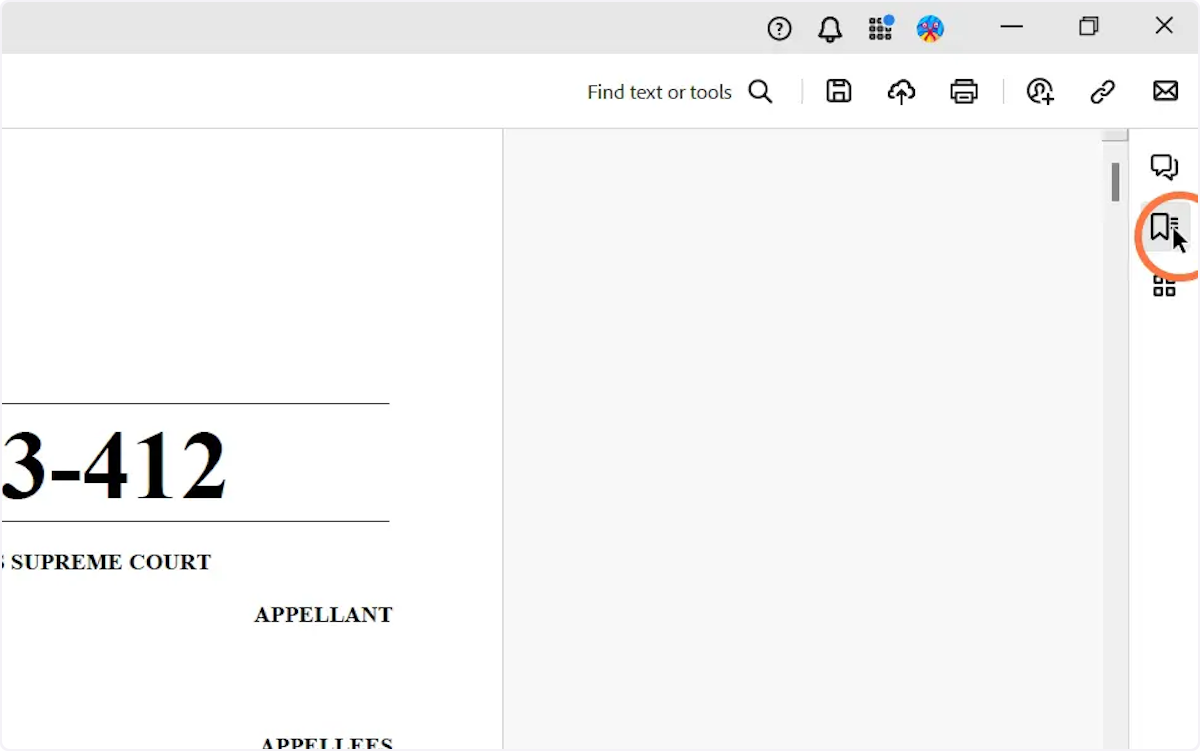
1. Click the bookmarks icon.

In the new version of Adobe, this is on the right-hand side of the page.

Step 1 screenshot

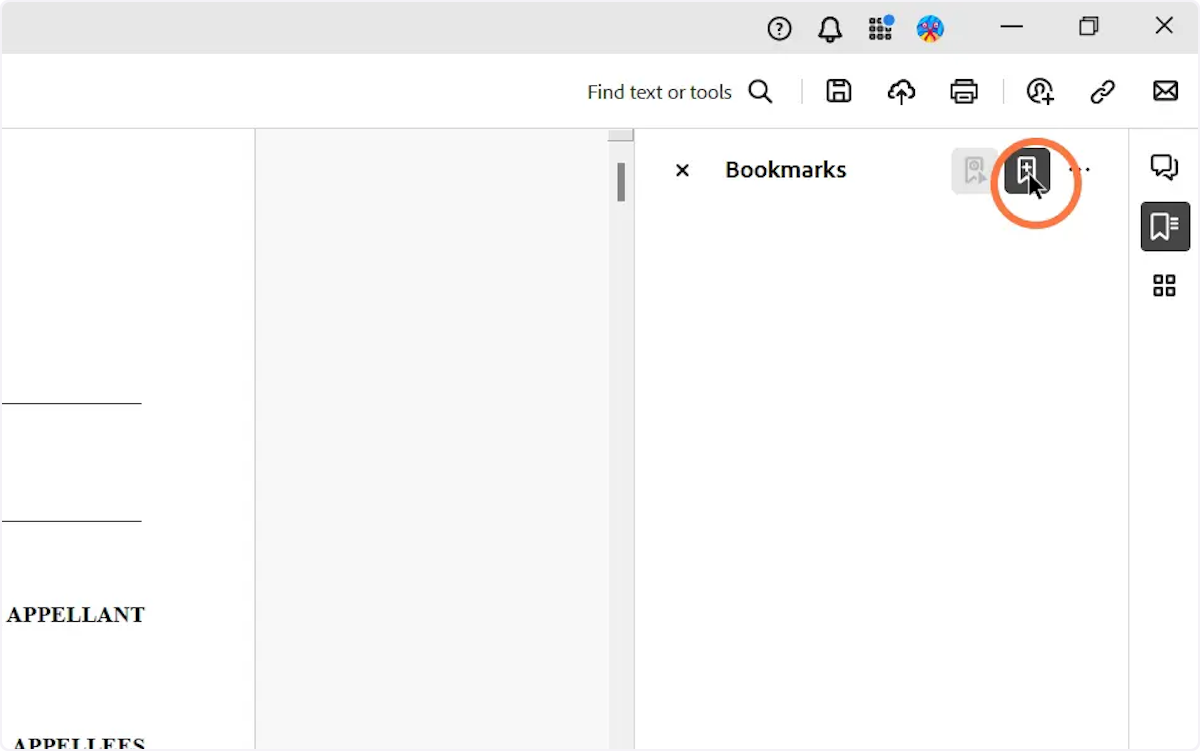
2. Click the add bookmark icon (a bookmark with a plus sign inside of it).

Step 2 screenshot

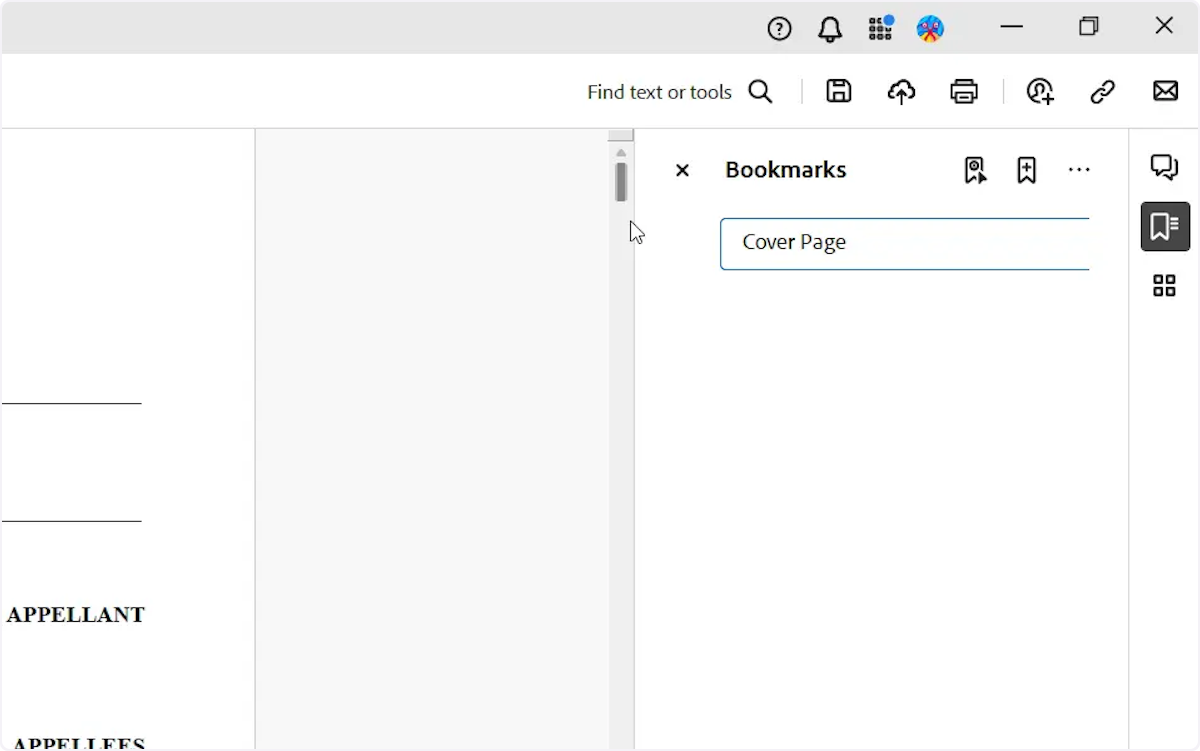
3. Type the name of your new bookmark and press “Enter.”

Step 3 screenshot

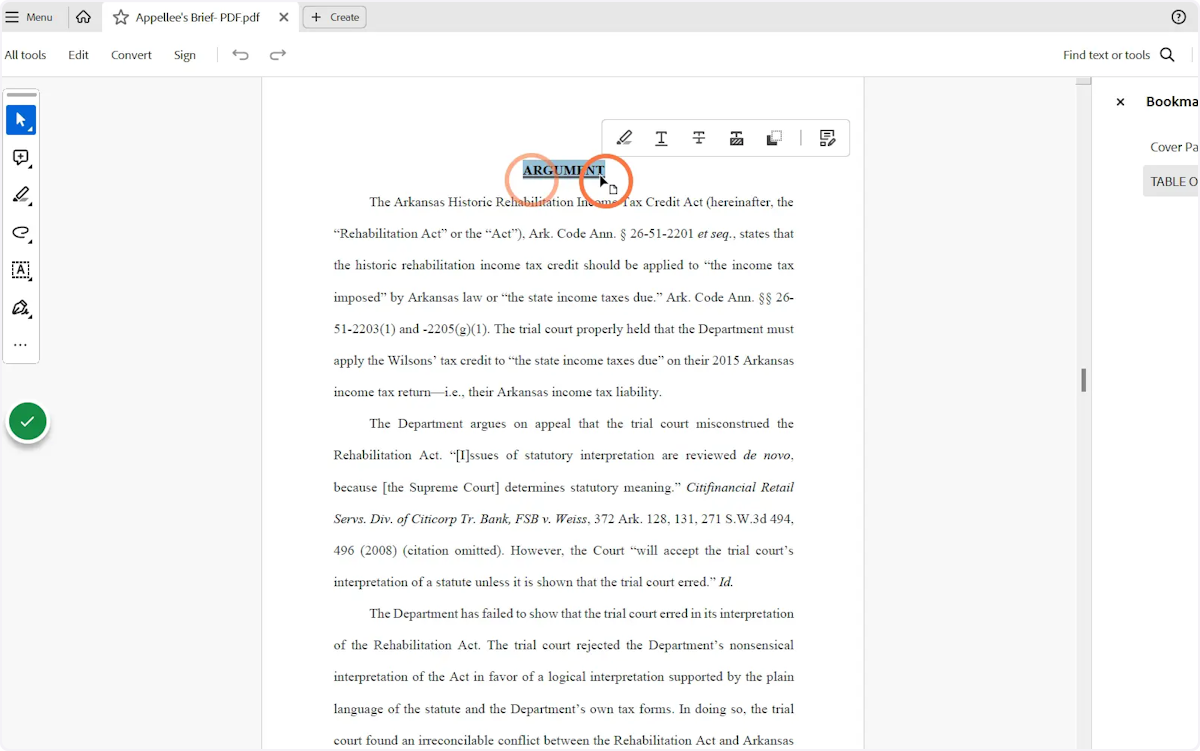
4. You can also highlight the text . . .

Step 4 screenshot

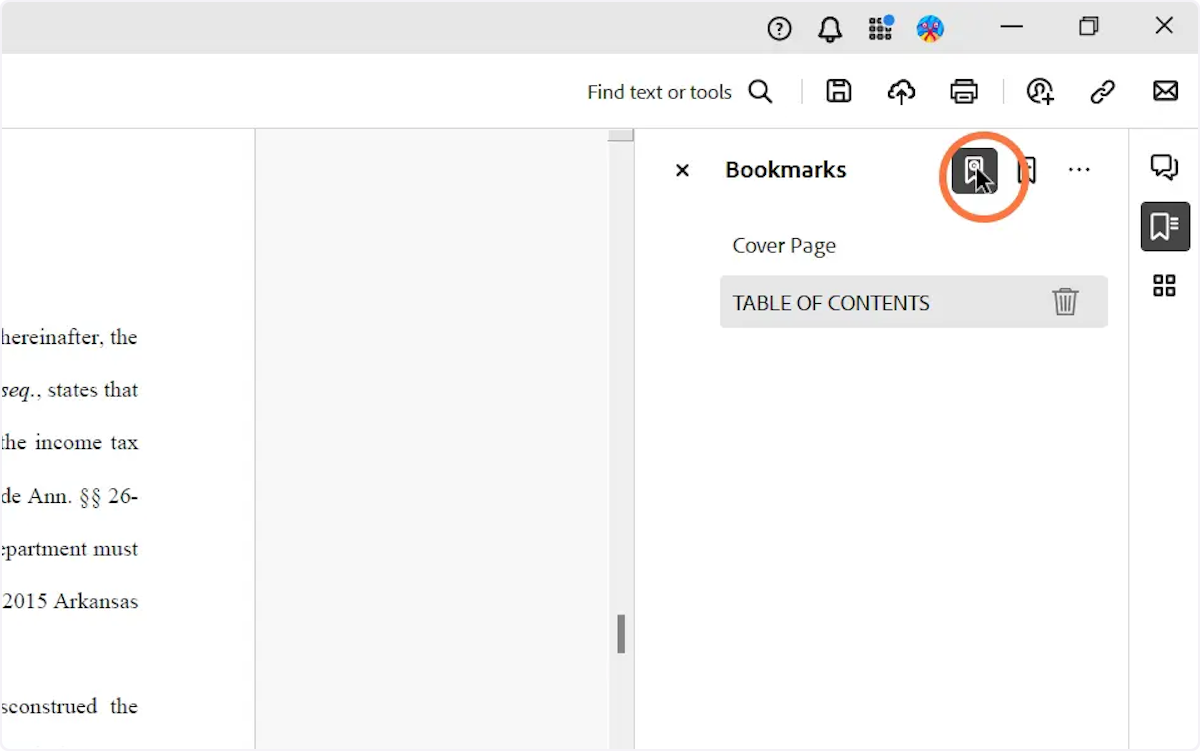
5. . . . and then click the add bookmark icon, and the highlighted text will be the name of your bookmark.

Step 5 screenshot

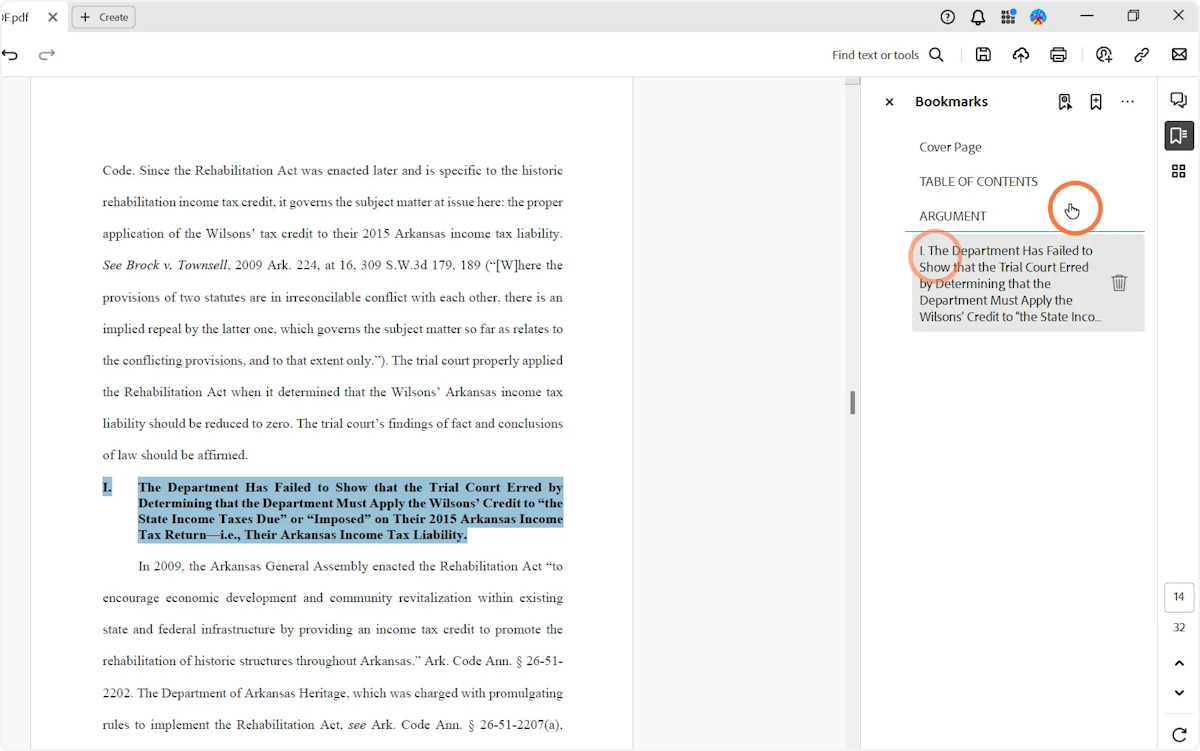
6. To “nest” a bookmark, simply drag the bookmark into the heading you are trying to nest the bookmark under.

Step 6 screenshot

Denial of a Motion for Summary Judgment as an Appealable Order: Possible, but Rare.

⚖️ Case: Kenmark Optical, Inc. v. Charles Ford, 2023 Ark. App. 431.

🔑 Key Takeaway: The denial of a defendant’s motion for summary judgment on an affirmative defense will only be immediately appealed in very limited circumstances.

📝 Background: The plaintiff brought this case under Ark. Code Ann. § 4-7-301 et seq., which (generally speaking) governs the payment of sales commissions by out-of-state principals to in-state sales representatives. In addition to setting the parameters of the payment of commissions (such as requiring a written agreement and setting the timeline for paying the commissions), the statutes also permit a sales representative to obtain treble damages, plus attorney’s fees and costs. In its answer to the complaint, the defendant in Kenmark Optical raised as an affirmative defense that the statutes violate the Commerce Clause and the Equal Protection Clause of the U.S. Constitution. The defendant then filed a motion for partial summary judgment on the same issue. The trial court granted summary judgment to the defendant as to the treble damages portion of the statutes, but denied summary judgment as to the remaining portions of the statutes.

Main Question: Was the denial of the motion for summary judgment appealable? Generally, the denial of a motion for summary judgment is considered interlocutory (and thus not appealable), but there was one case that the defendant relied on for its argument to the contrary.

➡️ That One Case: In BPS, Inc. v. Parker, 345 Ark. 381, 47 S.W.3d 858 (2001), the Arkansas Supreme Court held that the trial court’s denial of a motion for summary judgment on that particular defendant’s affirmative defense (the Fireman’s Rule) was appealable. In that case, the trial court did not merely deny the motion for summary judgment. Instead, in its 18-page “Joint Findings of Fact and Conclusions of Law,” the trial court in BPS did not simply examine whether there was a genuine issue of material fact. Rather, the trial court went further and held that the Fireman’s Rule did not apply, essentially granting affirmative relief to the plaintiffs on the defendant’s motion for summary judgment. The Arkansas Supreme Court held that this “foreclosed [the defendant] from further asserting a defense under the Fireman’s Rule and from offering evidence at trial on that issue.” Therefore, the Arkansas Supreme Court held that the this portion of the circuit court’s order was “a final disposition and appealable.”

🪶 Opinion: Looking back now at Kenmark Optical, the Arkansas Court of Appeals considered whether the denial of the motion for summary judgment in this case was appealable, and distinguished Parker. The court first held that, unlike in Parker, in this case, there was “nothing in the circuit court’s order that serves as a final disposition regarding the constitutionality of” the relevant statutes. Thus, unlike in Parker, this was not a situation where the denial of the motion for partial summary judgment essentially served as the granting of summary judgment in favor of the plaintiff. The Court of Appeals then held that “the circuit court’s order does not prevent [the defendant’s] presentation of any defense at trial.” Thus, this was not a situation where the denial of the motion for partial summary judgment essentially served as an order striking the affirmative defense (which would make the order appealable under Ark. R. App. P.–Civ. 2(a)(4)). Therefore, the order was not an appealable order, and the Court of Appeals dismissed the appeal without prejudice.

🔎 Further Reading: Although denials of motions for summary judgment are rarely appealable, the Arkansas Supreme Court in Parker relied on two other cases in an order denying a motion for summary judgment was held to be appealable:

  1. It might look strange, but this is how Court of Appeals cases were cited for a few years after the Court of Appeals was established. Rest assured, this is a Court of Appeals case, and this is the correct citation. ↩︎

Exhaust All Your Remedies (Even If It’s Exhausting)

⚖️ Case: Frankhouse v. City of Russellville, Arkansas, 2023 Ark. App. 435.

🔑 Key Quote: “[The Appellant’s] perception of failings in the [administrative] process cannot be addressed by avoiding the administrative procedure altogether.”

📝 Factual Background: This case started as a zoning dispute, but the relevant issue for this post relates to administrative procedure. Frankhouse had operated an apartment building on a piece of property for 20 years, but as it turns out, that property was zoned commercial. In 2020, he was told he’d have to ask the City Council to rezone the property as medium/high density residential, but when he did, the City Council denied the request. About a month later, the City served all of Frankhouse’s tenants with notices to vacate.

📜 Procedural Background: Rather than appeal to the board of zoning adjustment (BOA), Frankhouse went straight to circuit court. He sued for declaratory relief (seeking a declaration that because he had used the property as an apartment for so long that the City did not have the authority to require his tenants to vacate) and for injunctive relief (to prevent the city from trying to evict his tenants and to require the City to issue him the “necessary permits”). The City filed a motion to dismiss, arguing that the declaratory and injunctive relief claims were inextricably tied to Frankhouse’s appeal from the denial of his rezoning request. In response, Frankhouse stated that he was dismissing that appeal (leaving only the declaratory judgment and injunctive relief claims). The circuit court dismissed the lawsuit without prejudice, holding that Frankhouse’s failure to appeal to the BOA deprived the circuit court of subject matter jurisdiction.

🪶 Opinion: In response to the City’s argument that he had not exhausted his administrative remedies, Frankhouse argued on appeal that there are exceptions to the exhaustion-of-remedies doctrine that applied to his case. The Court of Appeals acknowledged that there are exceptions to that doctrine (no genuine opportunity for adequate relief, irreparable injury if required to pursue administrative remedies, futility of pursing administrative remedies, etc.), but held that Frankhouse had not adequately made or developed those arguments to the circuit court. In fact, Frankhouse had stated that he went directly to circuit court not for those reasons, but because of “the gravity of the action that the City was proposing to take” and “the uncertainty about what they could do.” With the appeal being rejected by the Court of Appeals because of the failure to exhaust administrative remedies, that left the requests for declaratory and injunctive relief. But the circuit court had not made specific rulings on either of those requests for relief, so neither issue was preserved for appeal.

Outcome: Because Frankhouse did not exhaust his administrative remedies, the circuit court did not have subject matter jurisdiction. And because the circuit court did not have subject matter jurisdiction, the Court of Appeals did not have subject matter jurisdiction. Therefore, the Court of Appeals dismissed the appeal.